Never have I been so comfortable—and yet uncomfortable—at the wheel of an air-cooled Porsche 911. In the right-hand-drive world, the 911’s driving position is normally a structurally imposed combination of yoga and deep vein thrombosis. But this car is different.
Yes, it’s right-hand drive, and yes, it’s an Australian mixtape of the 911’s greatest hits, with a Fat Boy Slim beat thrown in. But the greatest ergonomic compromises have been swept away with the installation of a completely new floor (in steel) that relocates the pedals and steering column to not only address the contortionist in the room, but also to make for an ambidextrous platform, just as suitable for left-hand-drive production. And suddenly, six-foot me is comfortable at the helm of a G-Series 911. Not to mention, I’m impressed by the scale of the engineering project this car represents.
So where does the discomfort stem? Mainly from this Zeigler/Bailey 4.4 being an expensive prototype; both its creators—businessman John Zeigler and mechatronics engineer Greg Bailey—are standing over me as I strap in for a test drive. It’s a cold, damp morning, the roads are strewn with wet leaves and moss, and rain is threatening.
Tech Brief
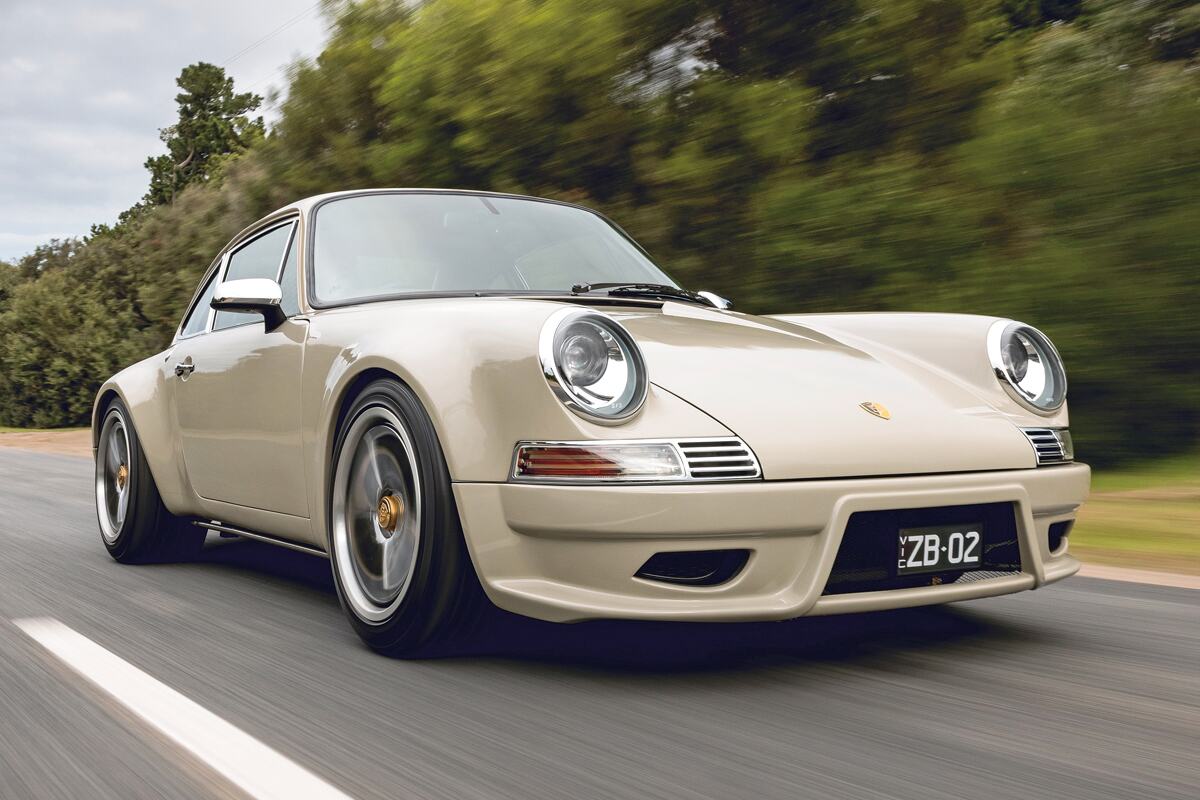
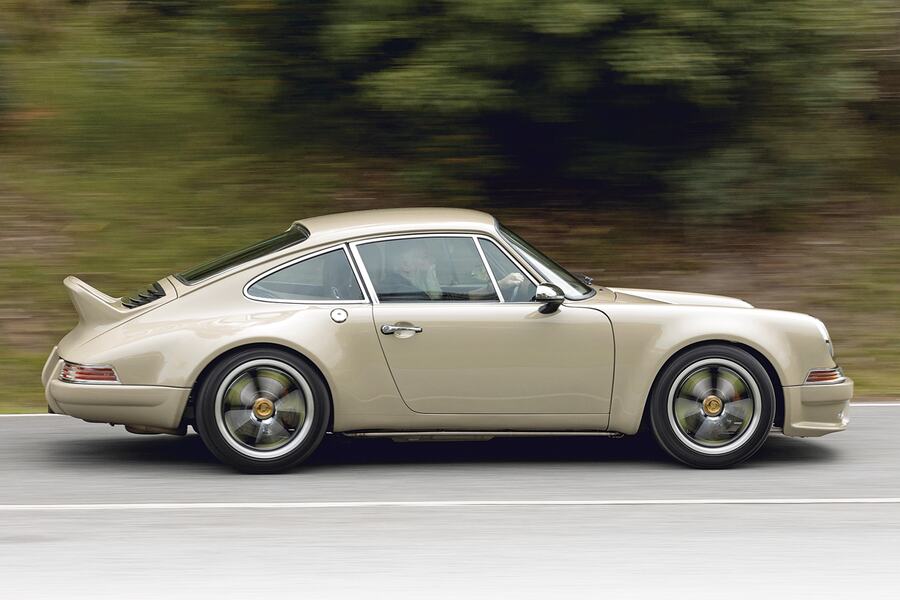
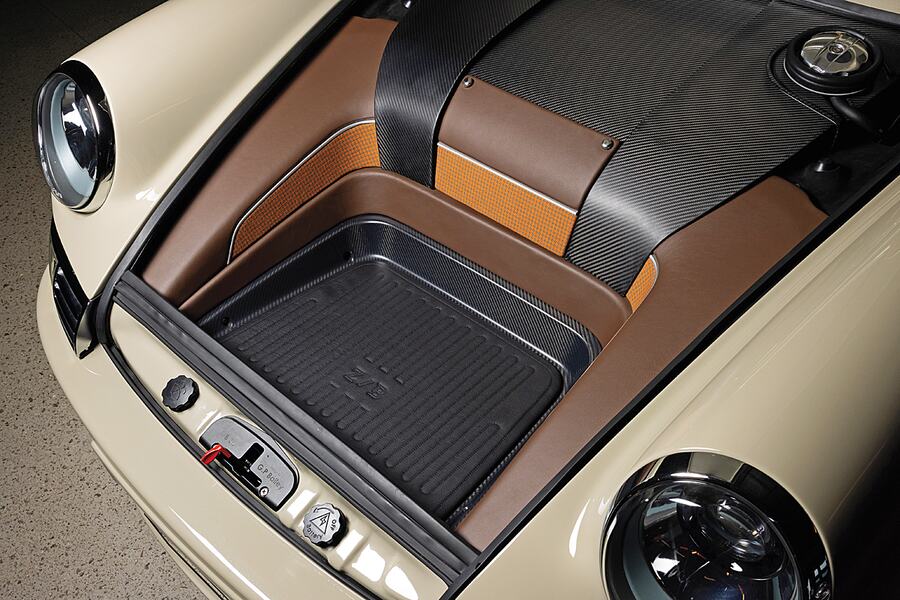
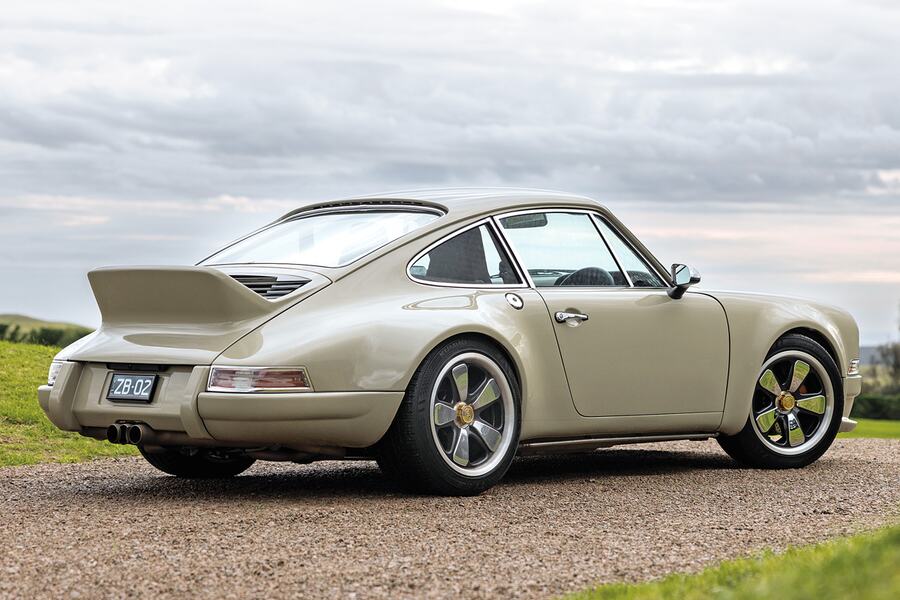
Remember that bit about the new floor? That sets the mood, really, because the only surviving pieces of original Porsche tin are the roof rails, trunk lid, and doors. The rest of the outer body is carbon fiber with a cosmetic conversion to long-hood form, complete with wide-body fenders, a new front air dam, and, of course, the classic 911 ducktail.
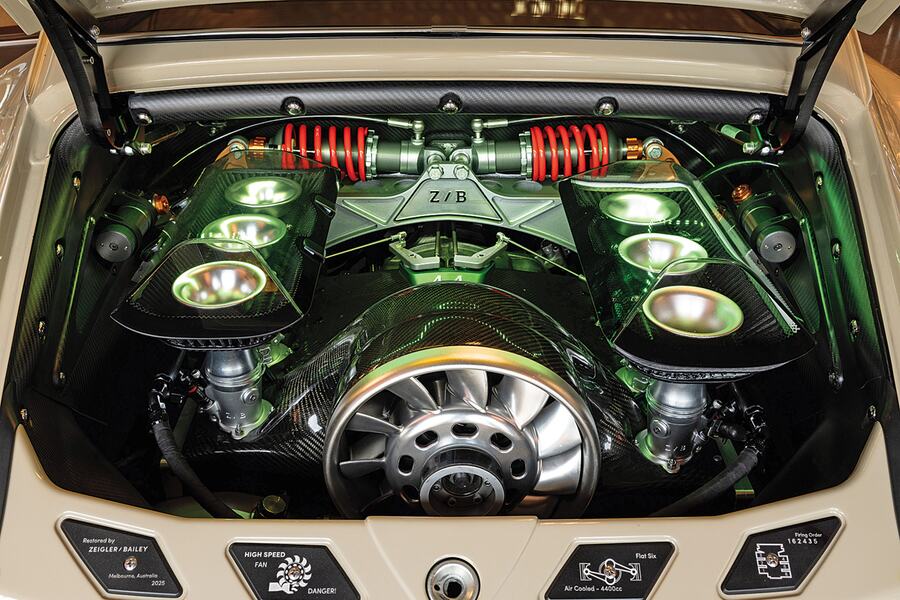
The front suspension swaps the G-Series torsion bars for a MacPherson strut setup à la the 964, but with specific pickup points and lower arms, while the rear suspension in the 4.4 is a multi-link arrangement using titanium pushrod rocker activation, with horizontal coilover dampers that now reside across the top of the gearbox and can be seen when you open the engine cover.
Its transmission is a relatively unmodified G50 Porsche unit, but the engine is where this re-interpretation of the classic 911 goes about 1,800 steps (as in, individual, specific part numbers) further. Rather than retain a standard set of 911 engine cases, with their four decades of heat cycles and decay, not to mention their ceiling of about 3.8 liters of displacement (if you’re staying out of hand-grenade territory), Zeigler/Bailey developed a completely new engine, with each case half, cylinder, and cylinder head machined from solid blocks of aluminum. Yes, a billet, air-cooled flat-six. And you’ve probably already guessed that the 4.4 on the badge represents the engine displacement in liters.
While many engineers would have been tempted to go ballistic with quad camshafts and four valves per cylinder, engineering boss Bailey was adamant that the end result needed to look, sound, and feel like an air-cooled 911 engine. Beyond that, staying with a single camshaft per bank, and just two valves per cylinder (although the spark-plug count has been doubled), Bailey was also better able to master thermal management, including those all-important cylinder head temperatures that 911 tuners around the globe understand and respect.
The result is a hand-assembled, billet-aluminum-cased, dry-sumped, 268-cubic-inch flat-six engine featuring a billet-steel crankshaft and 11.5:1 compression, making about 400 horsepower and the thick end of 370 lb-ft of torque. And it sounds about right with the soundtrack that any 911 owner will recognize; a noise that escalates from a symphony to death metal at the press of the exhaust bypass button that’s discreetly hidden.
The detail stuff is amazing, too. How about full electronic management and throttle-by-wire tech? Oh, and a set of headers and an exhaust system completely 3D-printed from stainless steel. Even the camshaft profiles have been fine-tuned to the nth degree by Bailey and his crew to reduce valvetrain shock and friction, and the intake bell-mouths, oil-jet cooling, carbon-fiber fan shroud, and triple exhaust tips are magnificent.
On the Road
The time has come to drive this almost production-ready machine. I hope to bring it back in one piece. The 4.4 fires up easily and feels sharp off the line. That said, there’s still some throttle-position calibration to be done, but the overall sense is of a willing engine, one with very little evidence of a flywheel.
That means snicking first in the very analog metal shifter (complete with sword-fight sound effect) should open up the possibility of stalling the thing in full view of its parents. But I get it rolling, realizing early on that the tractability of 4.4 liters, not my skill, is at work here.
The steering at low speeds is heavy, and there is a huge amount of caster, forcing me to pull on the three-spoke Momo steering wheel to move the front wheels. By the time the speedometer has started to register a change in velocity, that feeling has lessened, but there’s no doubt that this is a car with zero steering assistance. At speed now, the heaviness is replaced by accuracy, and that uncanny ability of 911s to feel like they’re in a slot once you’ve got them turned and settled.
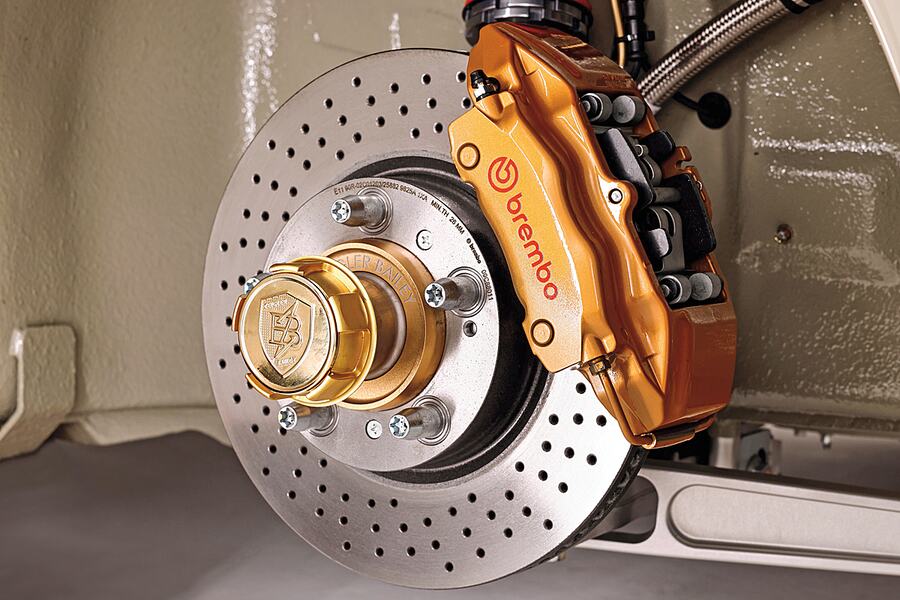
The huge brakes? No problem there, and the sticky tires on the 17 × 9-inch front and 17 × 11-inch rear Zeigler/Bailey-specific center-lock forged wheels are doing a great job on the wet leaves. If anything, I’d prefer a less aggressive suspension tune. As it stands, the Z/B feels rock-solid, with the emphasis on the rock bit.
Yes, the suspension is all adjustable, but I’m told it’s now set on its most forgiving, which is not the first word I would have reached for to describe the degree of harshness coming through the seat. Clearly, Greg Bailey’s background as a racing engineer is coming through here, but I can’t help thinking that customers might be looking for something a bit more civil—or at least less focused—in its approach. That said, it’s open for negotiation when specifying your own car.
And the engine? Lord, what a piece of engineering! The trick here, of course, is not whether the billet cube-monster would work, but whether it would be able to sustain the tactile spirit of an original and make the power and torque numbers Z/B had in mind. I can confirm that their mission is accomplished.
It’s certainly not a mechanically silent engine, nor is it whirringly smooth to the point where it descends into the background. Nor should it be either of those things. But unlike an old-school 2.7- or 3.0-liter 911 engine, where you need the better part of 4,000 rpm on board to really stir it up, and where character trumps outright stomp, the 4.4 liters of billet brawn make their own statement of intent, in any gear. You floor the throttle, the noise increases, and the Zeigler/Bailey starts chasing down tomorrow. There are no uncertain terms here. Nor delay, nor hesitation—just instant thrust. “Addictive” barely covers it.
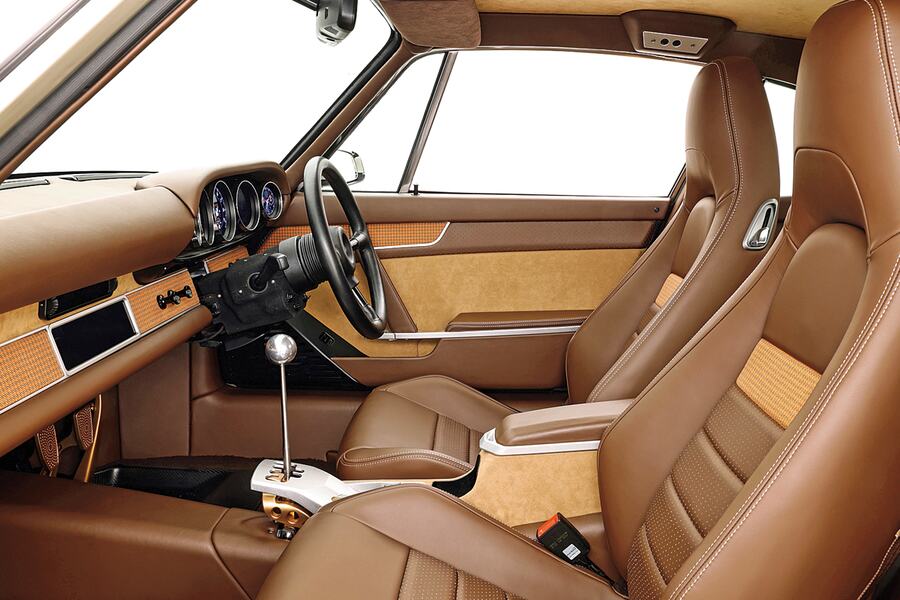
Slowing things down to appreciate the rest of the details, it’s soon apparent the Z/B 4.4’s interior is worthy of a design PhD thesis of its own. The plaid seat inserts (on the 10-way power front buckets from a 991, retrimmed to Zeigler/Bailey’s spec) speak for themselves, as do the lush materials used everywhere you look and touch. So does the exposed gate shifter, which hovers above the tunnel, and the Momo steering wheel, which is the perfect combination of nostalgic and attention-grabbing.
But three interior design elements really stand out. The first is one you can see for yourself. Or not see, as it happens. And that’s the absolute elimination of anything identifiable from another make, model, or generation of 911. Only if you’d spent years on the Stuttgart assembly line might you spot that the steering column is from a later, liquid-cooled 911, but the re-covering and the remanufactured wands that jut from it confirm the Z/B’s standalone identity. Too often, cars like this will borrow bits and pieces from the broader automotive world, leading to, first, a game of name-that-part and second, that contempt born of familiarity that buyers of allegedly bespoke cars experience far too often.
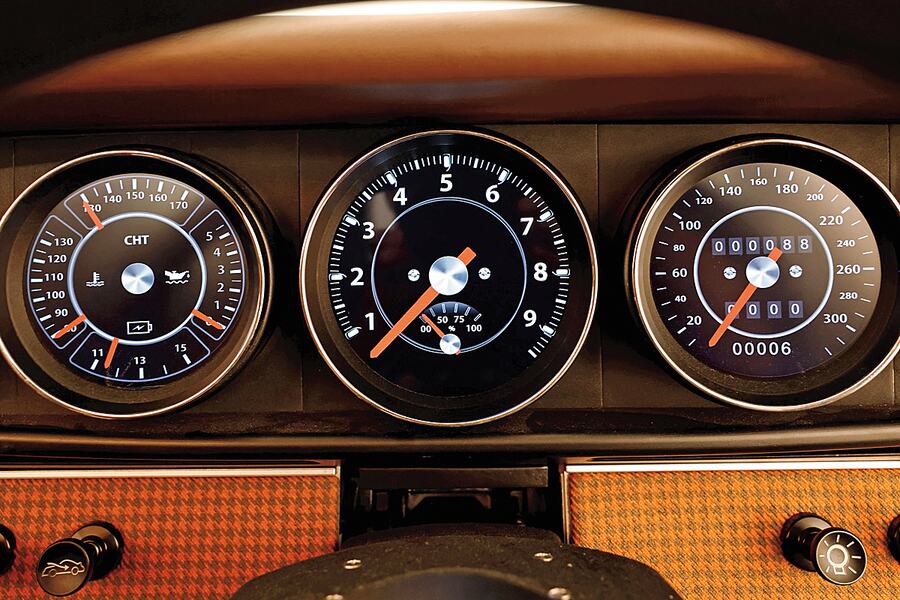
The second interior triumph is the fully digitized dashboard that manages to retain the five-dial purity and clarity we all love, but wraps that affection in modern functionality. In pure informational terms, there’s a whole lot more going on here with cylinder head temps, air-fuel ratio, and engine vacuum (and plenty more) all being monitored—and displayed, if you want to know that stuff in real time.
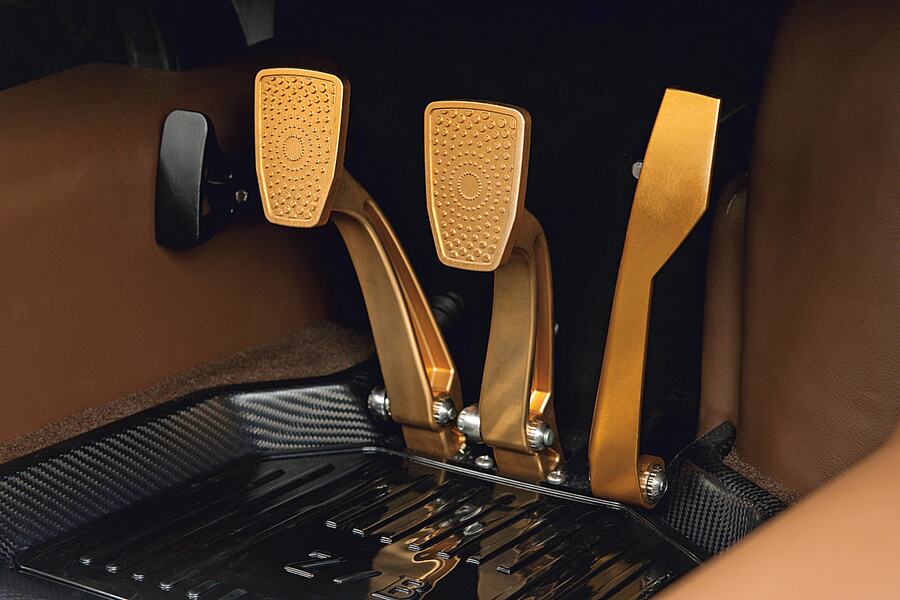
The crackly old Blaupunkt has been replaced by a touchscreen in the exact same location—a perfect metaphor for the third major achievement of this car’s transition from 1970s hero to 21st-century supercar. And that is the way Zeigler/Bailey has managed to combine new tech with old muscle memory. The door pulls, for example, are now made from aluminum, but are located in the same position and operate with the same action as the original G-Series 911.
There’s now keyless entry and start, of course, but the starter button is placed right where the ’70s version’s ignition key sat, and in a further triumph of intellect, is ignition-key-shaped. Even things like the oil pressure gauge pay their respects to the OG, and the one bar per 1,000 rpm calibration looks and feels right to anybody with experience in a classic 911.
The Verdict
Ultimately, this is not a car for those who place novelty over substance. Yes, there are faster cars, and cars that will produce more lateral G-force, and even cars that will ply your ego with longer strokes. And yes again, there are alternatives that might be more inviting to somebody looking to be pampered rather than stimulated. But if you love old, air-cooled Porsches and have ever wondered how far the formula could be pushed, then the Zeigler/Bailey 4.4 stands as quite possibly the most single-minded example of that line of inquiry.